
A useful vehicle recovery quote starts with the job, rather than a headline figure that ignores the car, the collection point or the destination. Moving a rolling hatchback from an open car park is a different task from recovering a damaged van from soft ground. This guide explains the information that helps Winch Me Out assess your request, compare the work involved and give you a price for the service you actually need.
Start with the service you need
Describe the outcome you want. A breakdown recovery normally involves collecting an immobilised vehicle and delivering it somewhere else. A mud pull-out may finish once the vehicle reaches suitable firm ground, while a ditch recovery may also require onward transport. A booked vehicle movement has different planning requirements from an urgent roadside request.
Tell us whether you need a pull-out only or collection and delivery. If you already have a garage in mind, check that it can accept the vehicle. Giving one clear destination helps prevent an incomplete quote based on the wrong job.
Distance is one part of the assessment
Collection and delivery postcodes give the team a starting point for planning the journey. The actual access route also matters: a vehicle beside a busy dual carriageway cannot necessarily be approached in the same way as one on a residential driveway. Share a map pin if the address covers a large site or the vehicle is away from its entrance.
For long-distance car recovery, confirm the intended destination before accepting a quote. If the destination changes, ask for the revised price before the additional journey is agreed.
The vehicle changes the loading plan
Make, model and transmission help identify what needs moving. For vans, include the body type and whether there is cargo inside. Mention roof equipment, a trailer, lowered suspension or modifications that could affect access. Accurate details are more useful than simply describing a vehicle as small or large.
Electric vehicles, automatics and four-wheel-drive vehicles may have particular transport requirements. The right method depends on the model and its condition. The team's assessment must account for the vehicle being recovered and the recovery equipment's permitted capacities.
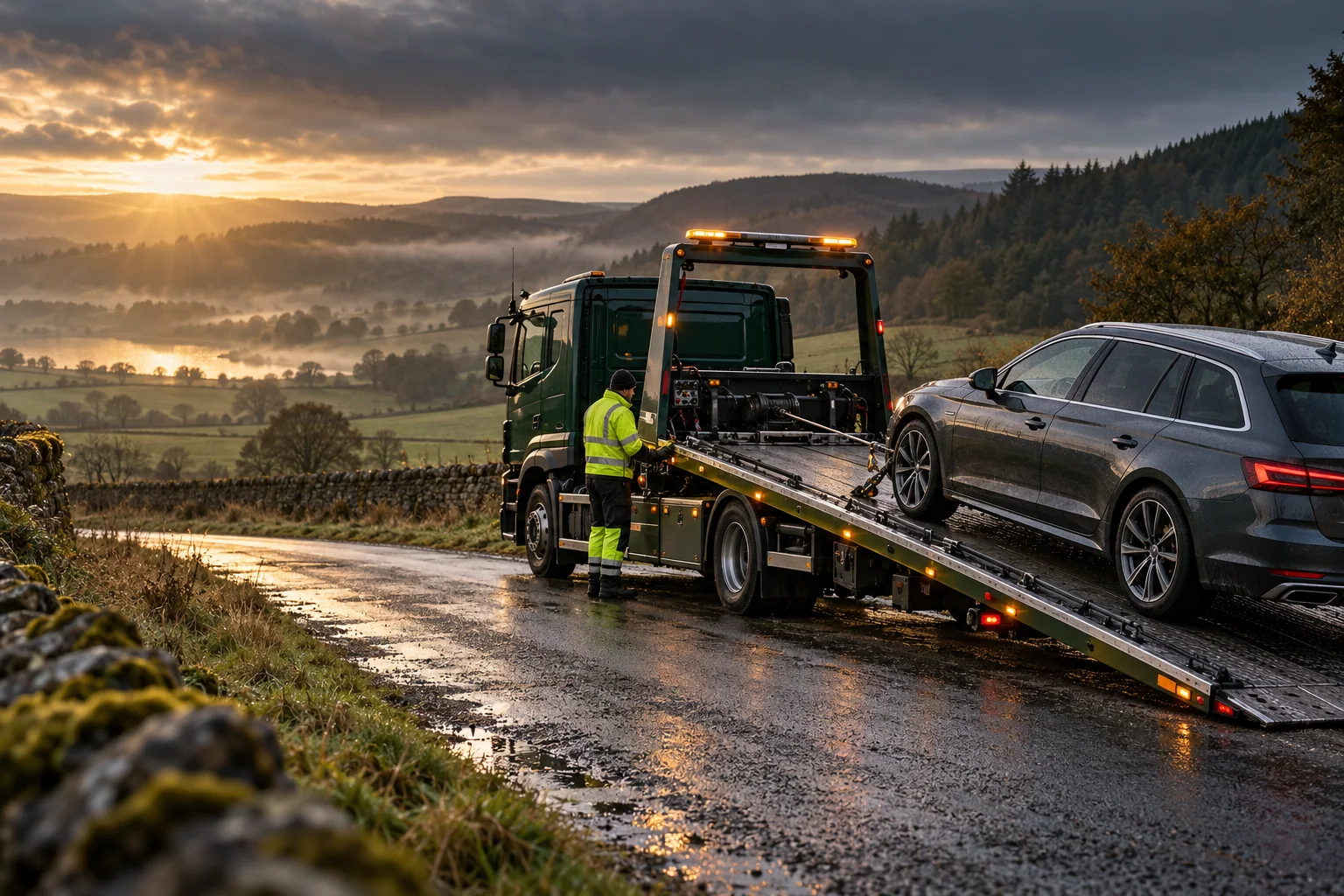
A non-runner needs an accurate description
A car that does not start may still roll and steer. Another may have a locked parking brake, damaged wheel or no usable keys. Those are different loading situations. Tell us what you already know about neutral selection, steering, handbrake release and wheel damage, without attempting repairs or unsafe tests to complete the enquiry.
If a fact is unknown, explain that in the notes. Clear information lets the team consider suitable loading arrangements instead of arriving with an assumption that the vehicle can simply be driven aboard.
Soft ground and restricted access need more detail
A muddy field, grass verge, ditch or narrow gateway can change the work substantially. State how far the vehicle is from a firm road, whether it is leaning, and whether any part is submerged. Include access restrictions such as a locked gate, a low entrance or limited turning space.
Photographs should show the whole situation, not just the registration plate. Winch recovery requests need at least three useful photographs through the form, taken only from a safe position. An initial assessment may still need further information before a recovery method and price can be confirmed.
Compare the complete service, not just the first number
Ask what the price includes: the agreed collection, loading requirements, destination and any work already identified. Clarify whether a deposit is required, when the balance is due and what happens if the information or destination changes. Availability and an estimated arrival should also be confirmed directly.
The Competition and Markets Authority's pricing guidance supports clear total prices and information about unavoidable charges. For your own comparison, keep the written quote and make sure competing prices describe the same vehicle, route and loading condition.
Send these details for a recovery quote
Use the quote form once you are in a safe place. Add notes about anything that could change collection or delivery, and choose how you would like the team to contact you.
- Vehicle make, model and manual or automatic transmission.
- Exact collection location and the delivery postcode or full address when onward recovery is required.
- Whether the vehicle rolls, selects neutral and releases its handbrake, plus any wheel damage.
- Access information, photographs for winch assessments, requested date and passenger requirements.
Useful recovery questions
Is there one fixed vehicle recovery price?
No single figure describes every collection. Distance, vehicle condition, access and the work requested need assessing. Ask for a quote for your specific job.
Is a pull-out quote the same as car transport?
Not necessarily. Confirm whether you need the vehicle moved to firm ground only or loaded and delivered elsewhere. These are different service requirements.
Why do you ask whether the wheels roll?
Rolling condition affects loading arrangements. A locked or damaged wheel needs to be identified before collection so the team can assess the job accurately.
Can I get a quote without knowing the fault?
Yes. Describe the symptoms and what you know about the vehicle's condition. You do not need a mechanical diagnosis to request an assessment.
Will the cheapest headline price always cover my recovery?
Check the complete written scope. Confirm the collection, destination, loading condition and any applicable charges so you can compare equivalent services.
Should I book a garage before arranging delivery?
Check that your chosen destination can accept the vehicle and tell us about opening hours or unloading restrictions before the recovery is agreed.