
A vehicle does not need a running engine to require a thoughtful loading plan. A dead battery, locked electronic parking brake, damaged wheel or unavailable key can affect how a car reaches a recovery platform. Automatic, hybrid and electric models also have transport instructions that vary by manufacturer. Before booking non-runner recovery, provide the details you already know so the team can assess the vehicle and the collection point together.
A non-runner can describe several different situations
One non-running car may roll and steer normally. Another may have a transmission fault, collision damage or wheels that cannot rotate. A vehicle without keys may have different access issues again. Saying only that it does not start leaves important questions unanswered.
Explain whether it stopped during a journey, has been parked for a long time or is being collected from another site. Include known warning messages and visible damage, while keeping the description factual. You do not need to diagnose the mechanical fault before asking for a collection assessment.
Identify the exact model and powertrain
Send the make, model, approximate year and transmission. If the vehicle is electric, hybrid, plug-in hybrid or four-wheel drive, mention it explicitly. Include a registration if you want to help identify the specification, but do not assume that a model name alone tells the team which drivetrain is fitted.
For a van, add the body type, any load inside and modifications affecting height or ground clearance. A loaded van and an empty passenger car are different transport requests. Tell us about a trailer, roof box or unusual accessory before a price and collection plan are agreed.
Why neutral and the parking brake matter
The team needs to know whether the vehicle can roll, whether neutral can be selected and whether the handbrake releases. Also identify whether the steering works and which wheels are damaged or locked. These observations help describe the loading problem; they are not instructions to force a control or attempt a repair.
If power has failed, do not assume an electronic parking brake or selector will behave as normal. Tell us what you already know and whether the keys are available. Consult the vehicle's handbook and let the recovery assessment determine what further action is appropriate.
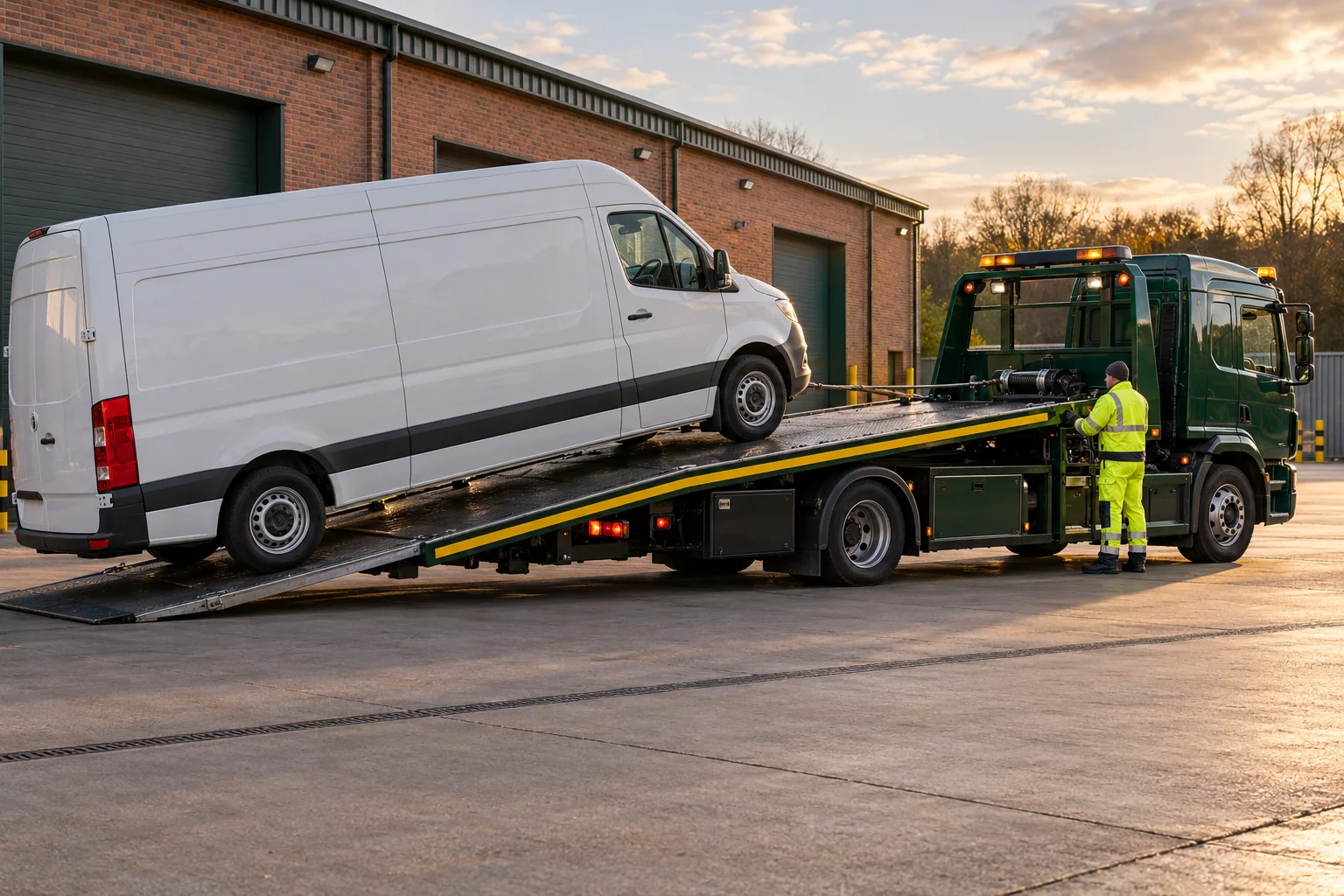
Automatic and electric vehicles need model-specific instructions
There is no universal rule that placing every automatic or EV in neutral makes it suitable for towing with its wheels on the road. Transport and loading instructions depend on the particular vehicle and the fault. The owner's manual or manufacturer's recovery information should guide the method.
Department for Transport EV recovery guidance identifies flatbeds, trailers or suitable dolly arrangements as transport options while requiring reference to manufacturer information. Explain the model and condition first; asking for a flatbed does not remove the need to plan how a disabled vehicle can be loaded.
Report damage, water exposure or electrical concerns
Tell the team if an EV or hybrid has been in a collision, exposed to water or has visible underbody damage. High-voltage systems introduce hazards that need assessment. Do not touch exposed electrical components or attempt to disconnect or dismantle the high-voltage system yourself.
If there is smoke, a developing fire or an immediate risk to people, keep clear and call 999. A commercial recovery request must not delay an emergency response. Share the vehicle type and what has happened with the emergency operator, and follow the instructions given.
Access and destination still matter
Give the exact collection point, not just a business name covering a large site. Mention underground parking, low entrances, tight turning areas, steep ramps, locked gates or a vehicle parked against a wall. Photographs from safe positions can help explain space around the car and any damage affecting access.
At the delivery end, confirm the postcode or full address and whether the garage or recipient can accept a non-running vehicle. Discuss arrival arrangements and unloading restrictions in advance. If the fault may prevent the vehicle being repositioned after delivery, tell the destination before collection is booked.
Prepare one clear recovery enquiry
Bring the vehicle, access and delivery information together in the quote form. Add any passenger requirements and the requested date. If something is unknown, explain that in the notes instead of choosing an answer that might suggest easier loading than the actual situation.
Winch Me Out can then review the request and discuss suitable arrangements, availability and price. The goal is a collection plan that matches your vehicle's condition and its manufacturer's requirements, rather than a generic promise based on the word non-runner.
- Make, model, year, transmission and powertrain.
- Rolls, neutral selection, parking brake, keys and steering condition.
- Wheel damage, collision or water exposure, access and destination.
- Safe photographs, requested collection date and passenger requirements.
Useful recovery questions
Can a car that will not start still be collected?
Submit its details for assessment. Rolling condition, access, keys and damage help determine suitable loading arrangements; a running engine is only one part of the picture.
Can every automatic car be towed in neutral?
Do not assume so. The vehicle's manufacturer instructions and the fault must be considered before deciding on an appropriate recovery method.
Does an electric vehicle always need a flatbed?
The transport method must follow the model's instructions and condition. Official guidance discusses flatbeds, trailers and suitable dollies, rather than one blanket method for every EV.
What if the electronic handbrake will not release?
Tell the team before collection and explain whether the car has electrical power and usable keys. Do not force a release or improvise a loading method.
Can you assess recovery when a wheel is damaged?
State which wheel is affected and describe what you can safely see. Send useful photographs from safe positions so the loading requirements can be reviewed.
Should I disconnect an EV battery before recovery?
Do not attempt high-voltage work yourself. Report the condition and any damage, follow manufacturer guidance, and leave technical recovery decisions to the assessment.