
A car stuck on a wet grass verge or a van stranded in a muddy field needs a recovery assessment that considers the ground, the vehicle and the route back to firm access. The same applies to a vehicle in a ditch, where its position may be difficult to judge from a close-up photograph. Put people's safety first, avoid making the situation worse and gather only the information you can obtain without approaching a hazard.
Deal with immediate danger first
If someone is injured, trapped or in immediate danger, call 999 and describe the location. A quote request is not an emergency call. Tell the emergency operator about traffic, water, the vehicle's position and anyone who cannot get to safety; follow their instructions.
Do not climb underneath an unstable vehicle, enter a ditch to inspect it or position yourself where it could move towards you. If the vehicle is near a motorway or other high-speed road, use the relevant official breakdown guidance rather than treating the verge as an ordinary field recovery.
Avoid repeated attempts to drive out
Once the vehicle is stuck, repeated attempts can change its position and make an assessment harder. A vehicle resting awkwardly, sitting low in ruts or leaning towards a ditch should be assessed before further movement is attempted. Stop and explain what has already happened when you contact the recovery team.
Do not ask bystanders to stand behind the vehicle and push, crawl underneath it, or attach an improvised rope to a passing car. Recovery attachment points, vehicle movement and ground conditions need proper assessment. This guide is not a set of instructions for self-winching or a makeshift tow.
Tell us where the vehicle is, not just where the road begins
A postcode may cover a farm, woodland entrance or an entire rural road. Send a map pin or captured current location, together with a short written description. Name the entrance to use and say which side of the road the vehicle is on. If you are on private land, identify the access contact where possible.
Describe the approximate distance from a firm road or accessible hard ground. Include gates, narrow tracks, height restrictions, tight bends and anything that affects the approach. Do not walk along an unsafe route or through water to measure a distance; an honest estimate and explanation are better.
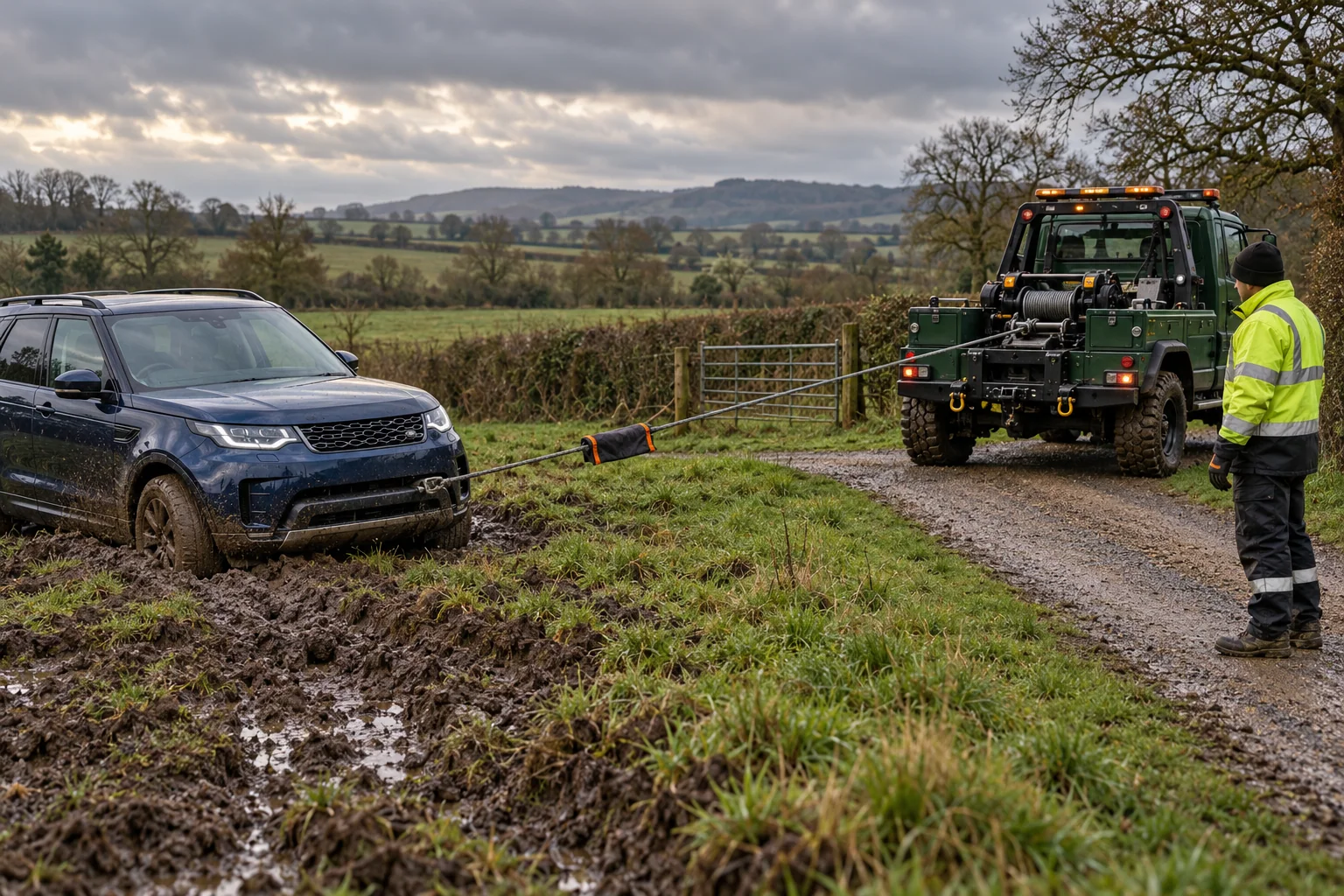
Three useful photographs make a better starting point
The Winch Me Out form requires at least three photographs for a winch assessment. Taken safely, one wider view can show the vehicle's position, another can show the surrounding ground, and a third can show the approach from firm access. Add a side view for a van if it helps explain its size or load.
Do not step into traffic, climb a bank or move close to an unstable vehicle to get a better picture. If safe photographs are not possible, explain the limitation in your enquiry or emergency call. Images assist an assessment; they do not guarantee that a particular recovery method is suitable.
Water changes the situation
Mud and floodwater are different hazards. Official flood guidance says not to walk, cycle or drive through floodwater. It can hide damaged surfaces and other dangers. Do not wade towards the vehicle or try to demonstrate the depth for a photograph.
If water is rising or someone is at risk, contact the emergency services instead of waiting for a commercial quote. Tell the recovery team if water has entered the vehicle, and identify whether it is electric or hybrid. Flood warnings and local access information should be checked before anyone plans a collection.
Choose a pull-out only or onward recovery
Explain whether you want the vehicle brought back to suitable firm ground or also transported to a garage, home address or another agreed destination. Being pulled free does not establish that a vehicle is safe to drive. Tell us about visible damage, a collision, warning messages or anything that makes you concerned about moving it.
For onward recovery, provide the destination postcode or full address and check that someone can accept the vehicle. Mention locked wheels, a handbrake that will not release, missing keys, an automatic gearbox and any passengers. These details help separate the pull-out assessment from the loading and transport plan.
Request an assessment with a clear description
Use the quote form to send the location, vehicle details and safe photographs. Include what the vehicle is resting on, how it became stuck and whether any previous recovery attempt has changed its position. The team can then ask relevant questions and discuss the service, price and availability.
An accurate description is more valuable than calling the job an easy pull. A recovery plan needs to fit the situation when help is arranged.
Useful recovery questions
Can a car be recovered from a muddy field?
Submit its location, position and access details for assessment. Suitability depends on the actual conditions; photographs alone do not confirm that a recovery can proceed.
Do I need recovery if only two wheels are stuck?
Describe where all the wheels are and whether the vehicle is leaning or resting on the ground. The number of stuck wheels alone does not determine the method.
Should I try a tow rope first?
Avoid improvised pulls. A suitable recovery plan needs to consider the ground, the vehicle, attachment points and the risks to everyone nearby.
What if the vehicle is in floodwater?
Do not enter floodwater to reach it or take photographs. If anyone is in immediate danger, call 999. Tell the team about water exposure before a recovery is assessed.
Does a pull-out include delivery to a garage?
Explain which service you want. A pull-out to firm ground and a pull-out followed by vehicle transport have different requirements and should be quoted accordingly.
Why do you need photos and distance from the road?
They help describe the vehicle's position and the available approach. Take photographs only from safe positions and give an approximate distance if exact measurement would be unsafe.